
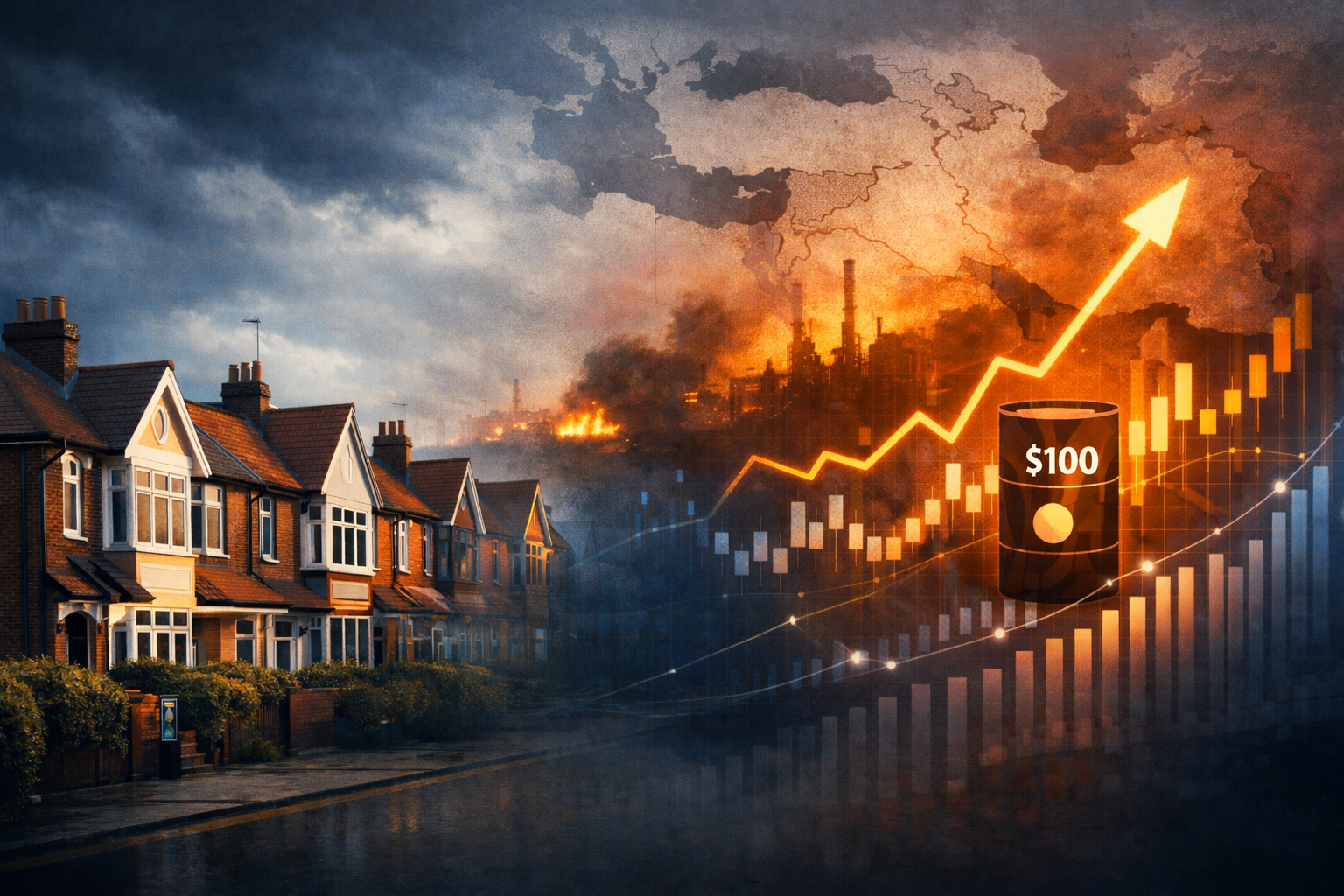
The global economy is deeply interconnected, and conflicts thousands of miles away can have a real impact on the UK housing market. One major factor currently shaping the outlook is the ongoing conflict in the Middle East.
While it may seem distant, the war is already affecting key economic drivers such as energy prices, inflation, and mortgage interest rates—all of which play a major role in determining UK house prices.
Let’s look at the key ways this conflict could influence the future of the UK property market.
01 Rising Energy Prices Could Push Inflation Higher
One of the biggest risks comes from energy markets. The Middle East is a critical region for global oil and gas supply. Disruptions to shipping routes and production have already pushed oil prices above $100 per barrel during parts of the conflict.
When energy prices rise, the cost of transportation, manufacturing, and everyday goods also increases. This creates higher inflation across the economy.
Higher inflation often forces central banks, including the Bank of England, to maintain higher interest rates for longer. And when interest rates stay high, mortgage borrowing becomes more expensive.
02 Mortgage Rates Could Remain Higher for Longer
Mortgage rates have already begun rising due to the economic uncertainty caused by the conflict. The average two-year fixed mortgage rate increased from around 4.83% to over 5.39% shortly after the war began.
Higher mortgage rates reduce affordability for buyers. When fewer people can afford to borrow large amounts, housing demand slows.
This could lead to slower house price growth or even price declines in some regions.
03 Buyer Confidence Is Already Falling
Uncertainty is one of the biggest drivers of housing market behaviour. When geopolitical tensions rise, people often delay major financial decisions such as buying a home.
If this cautious sentiment continues, demand could weaken further, putting downward pressure on property prices.
04 Banks Are Becoming More Cautious
Financial institutions are also reacting to the uncertainty. Some lenders have already withdrawn mortgage products and increased borrowing costs due to volatility in global financial markets.
If lenders remain cautious, borrowing could become more restricted. That could limit how much buyers can borrow, which may affect house prices over the next few years.
05 What Could Happen to UK House Prices?
Economists suggest three possible scenarios for the UK housing market:
Best-case scenario
If the conflict de-escalates quickly and energy prices fall, mortgage rates could stabilise, and house prices may continue to grow moderately.
Moderate scenario
If uncertainty continues but energy markets stabilise, house price growth could slow significantly but remain relatively stable.
Worst-case scenario
If energy prices surge and interest rates rise sharply, some analysts warn that UK house prices could fall significantly, potentially by as much as 15% in extreme circumstances.
Final Thoughts
While the UK housing market remains resilient, global events like the Middle East conflict show how interconnected the economy really is.

Energy prices, inflation, mortgage rates, and buyer confidence are all closely linked. As these factors shift, the UK property market could experience slower growth or increased volatility over the coming years.

For buyers and homeowners, staying informed and seeking professional mortgage advice will be more important than ever.
